
Movie spotlight
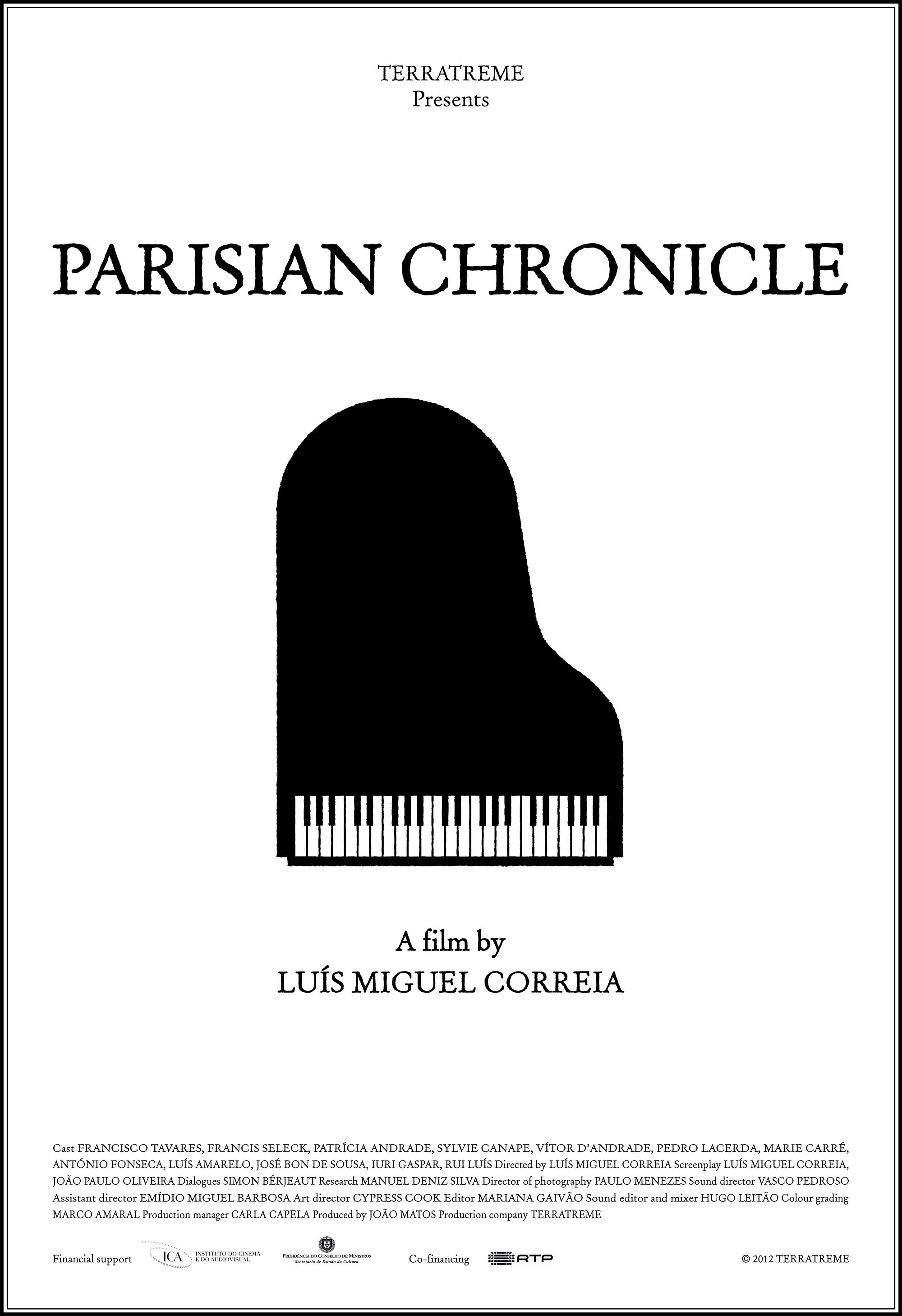
Crónica Parisiense
Paris, March 1939. While the march of the Nazi troops makes itself heard throughout Europe, exiled artists and intellectuals from all over the world still converge in the French capital. Portuguese composer Fernando Lopes-Graça is among them, sharing this cosmopolitan environment, on the verge of rupture. A happy coincidence brings him into the presence of the man he considers his master, the intransigent Hungarian composer Béla Bartók. For Lopes-Graça, the occasion presents itself as a unique opportunity to show Bartók his scores...
Insights
Plot Summary
The film is a highly stylized and allegorical exploration of Portuguese history, focusing on the country's complex relationship with France and its colonial past. Through fragmented narratives and visual metaphors, it examines themes of identity, memory, and the burden of history. It uses the figure of a young Portuguese woman in Paris as a central conduit for these historical reflections.
Critical Reception
Critically acclaimed for its artistic vision and ambitious scope, 'Crónica Parisiense' was praised for its unique cinematic language and thought-provoking engagement with Portuguese identity. Some found its dense symbolism and non-linear structure challenging, but generally, it was recognized as a significant work of art cinema.
What Reviewers Say
Visually stunning and intellectually stimulating.
A challenging yet rewarding cinematic experience.
A unique and personal reflection on history and identity.
Google audience: Information on Google user reviews is not readily available for this film.
Awards & Accolades
Notable selections at international film festivals, including its premiere at the Venice Film Festival.
Fun Fact
The film is often described as a 'visual essay' rather than a traditional narrative, employing a poetic and often abstract approach to storytelling.
AI-generated overview · Verify ratings on official sources