
Movie spotlight
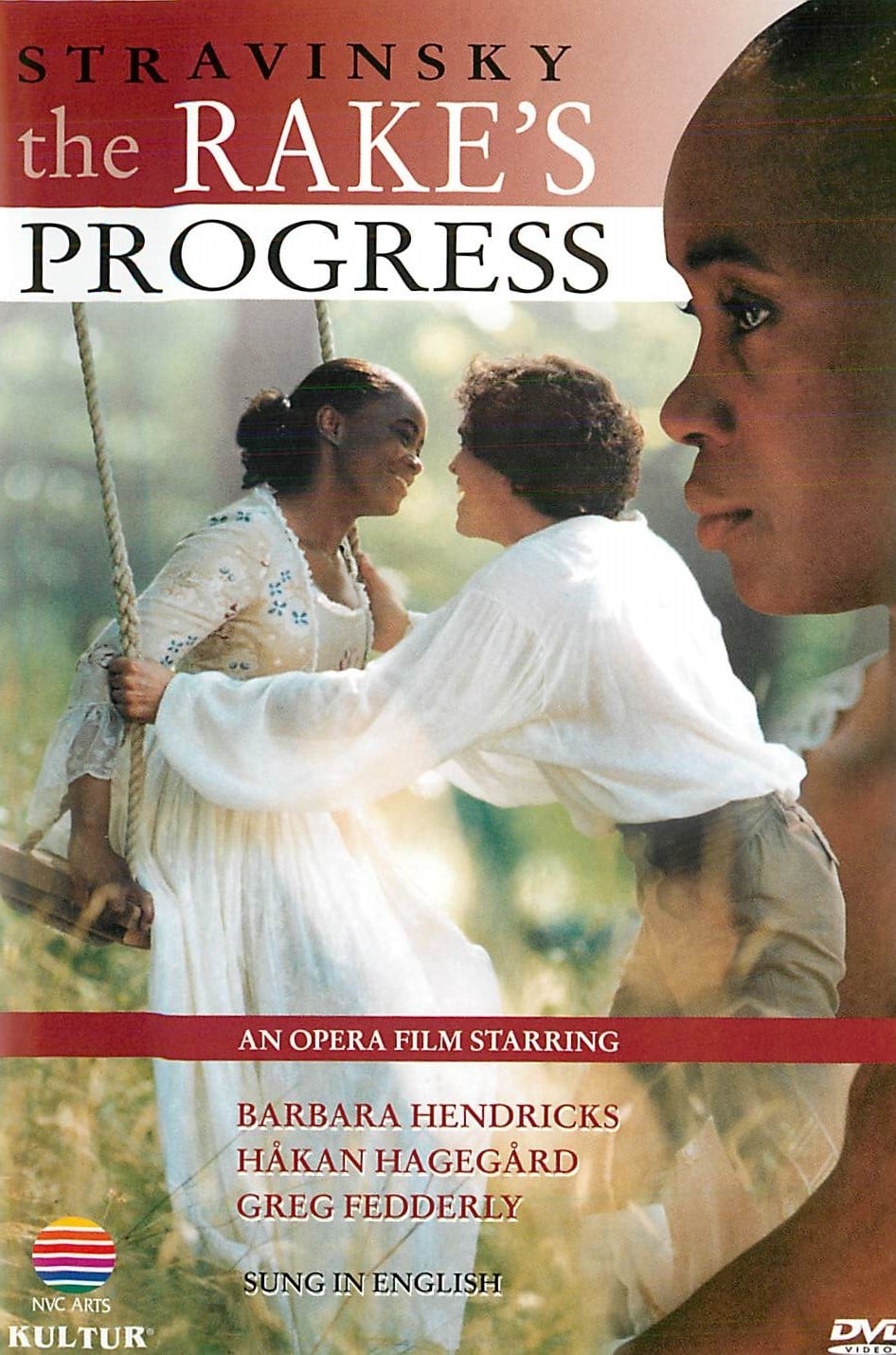
Stravinsky: The Rake's Progress
This lavish, cinematic realisation of Stravinsky's neo-classic masterpiece, performed in English, is filmed both in studio and on location. The imaginative richness in the music is complemented by costumes and sets which are, by turn, exquisitely garish and darkly grotesque to intoxicating effect.
Insights
Plot Summary
The Rake's Progress is an opera in three acts by Igor Stravinsky, to an English libretto by W. H. Auden and Chester Kallman. The story follows Tom Rakewell, a young man who inherits a fortune and leaves his village sweetheart, Anne Trulove, for London. There, he is seduced by the mysterious Baba the Turk and becomes entangled in a series of ill-fated endeavors, ultimately leading to his tragic downfall.
Critical Reception
The 1995 Glyndebourne Festival Opera production, recorded for video release, was generally well-received by critics for its strong musical performances and compelling staging. The singers were praised for their vocal prowess and dramatic interpretation, with particular acclaim for Chris Merritt as Tom Rakewell. The production captured the wit and drama of Stravinsky's score effectively.
What Reviewers Say
Praised for its vocally strong cast, particularly Chris Merritt.
Lauded for its faithful and effective musical interpretation of Stravinsky's score.
The production's staging and direction were noted for successfully conveying the opera's dramatic and satirical elements.
Google audience: Information on specific Google user reviews for this particular video recording is not readily available. However, general audience reception for Stravinsky's The Rake's Progress as an opera is often positive, appreciating its neo-classical style and dark wit.
Awards & Accolades
None notable for this specific 1995 video production.
Fun Fact
The libretto for 'The Rake's Progress' was inspired by a series of eight paintings and engravings of the same name by the 18th-century English artist William Hogarth.
AI-generated overview · Verify ratings on official sources