
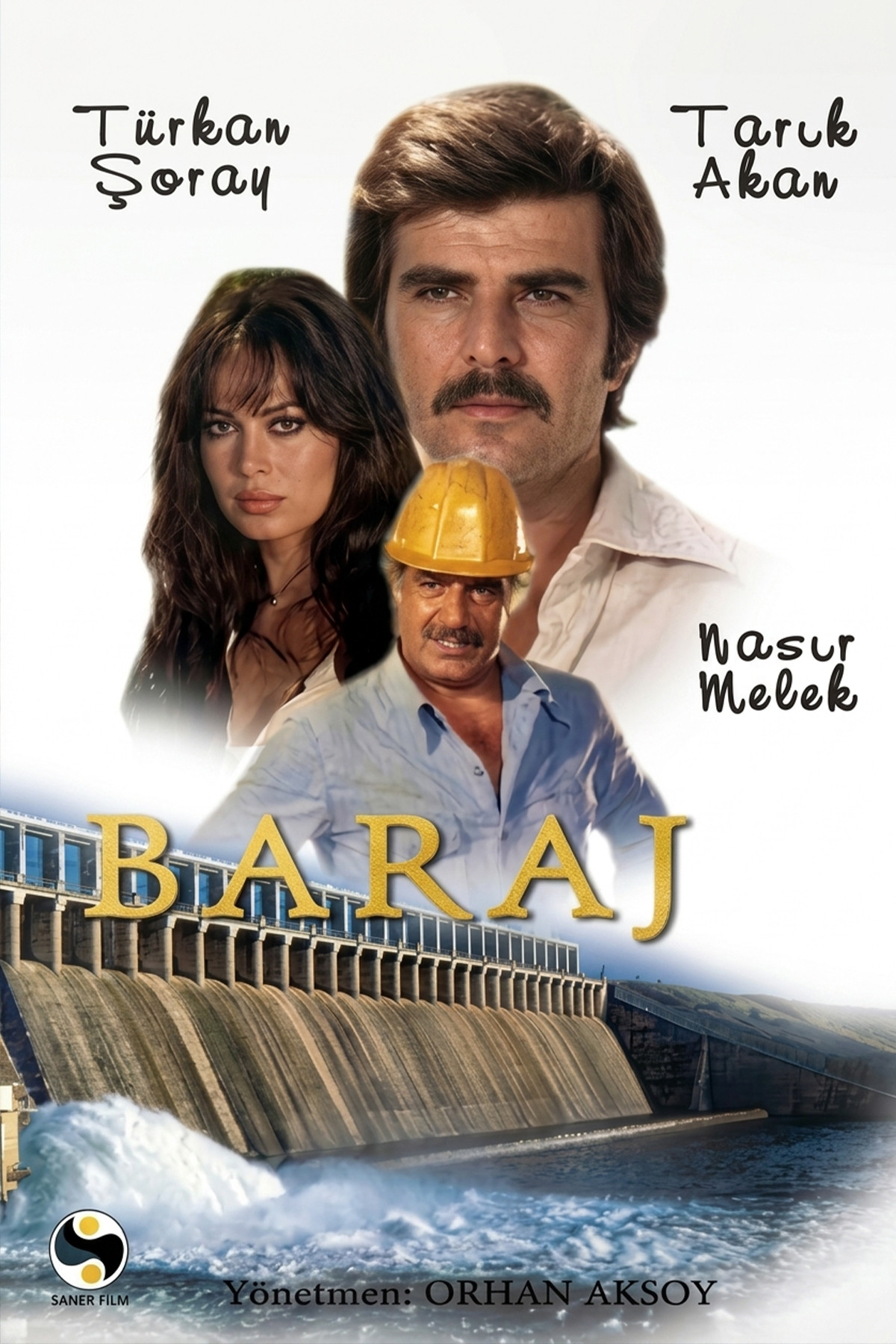

Baraj
Nazim, a foreman working on a dam construction, falls in love with Aysel, the most beautiful girl of the local brothel. Too shy to identify himself, Nazim sends her love letters, signing as Orhan, one of his employees - and a man with not many scruples... When Aysel arrives on the construction site, the deception does not last long. It all ends in a happy marriage. Only, it's not the end yet.
Insights
Plot Summary
A group of villagers are forced to migrate to the city when their village's dam project displaces them. Among them is a man who begins to build a new life and form relationships in this harsh urban environment. However, the struggles of poverty, social injustice, and the clash between traditional village life and modern city ways create intense conflict.
Critical Reception
Baraj is widely considered a masterpiece of Turkish cinema, lauded for its powerful social commentary, raw realism, and Yılmaz Güney's compelling direction and performance. It resonated deeply with audiences for its depiction of the plight of the rural poor migrating to the cities and the harsh realities they faced. Critically, it is recognized for its significant contribution to political and social cinema in Turkey.
What Reviewers Say
- Praised for its unflinching portrayal of social inequality and the human cost of development.
- Yılmaz Güney's performance and direction are highlighted as intensely powerful and authentic.
- The film is recognized for its realistic depiction of migration and the struggles of the working class.
Google audience: Information not available for Google user reviews.
Awards & Accolades
Nominated for the Golden Palm at the Cannes Film Festival.
Fun Fact
Yılmaz Güney wrote and directed Baraj while he was serving a prison sentence for political reasons, and he famously dictated the script to his wife.
AI-generated overview · Verify ratings on official sources