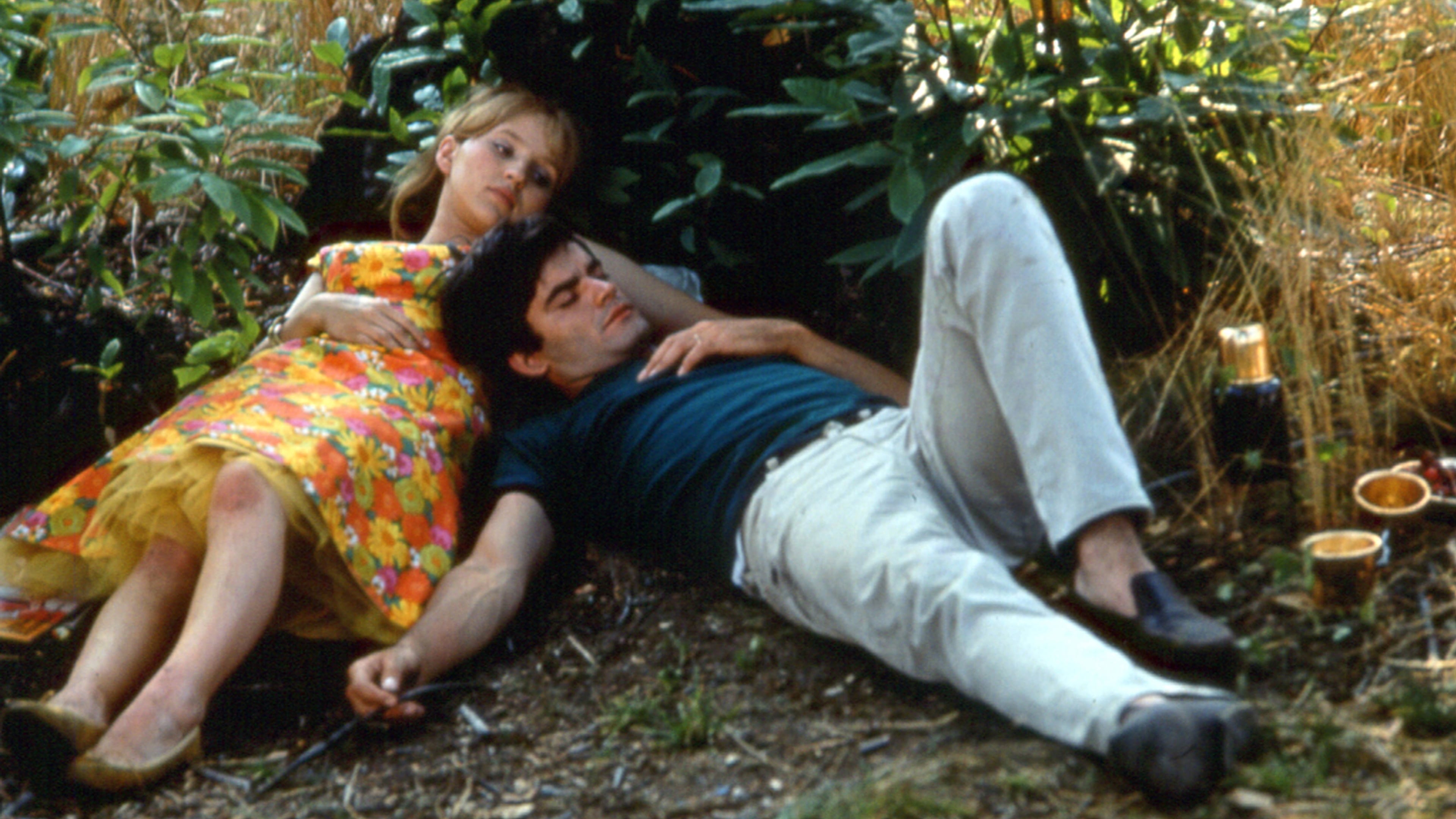


Happiness
Though married to the good-natured, beautiful Thérèse, young husband and father François finds himself falling unquestioningly into an affair with an attractive postal worker. One of Agnès Varda's most provocative films, 'Le bonheur' examines, with a deceptively cheery palette and the spirited strains of Mozart, the ideas of fidelity and happiness in a modern, self-centered world.
Insights
Plot Summary
Agnès Varda's short documentary "Happiness" offers a poignant and visually striking look at everyday life and the simple joys found within it. The film captures intimate moments and ordinary activities, presenting them with a contemplative and artistic sensibility that encourages viewers to find beauty in the mundane. It serves as a gentle reminder of the fleeting nature of happiness and the importance of appreciating the present.
Critical Reception
As a short documentary from 1965, "Happiness" received critical attention within the context of Varda's evolving filmography and the French New Wave movement. It is often cited for its observational style and its early exploration of themes that would recur in her later, more feature-length works. While not as widely discussed as her narrative films, it is recognized for its artistic merit and Varda's unique perspective.
What Reviewers Say
- Praised for its delicate observational approach to capturing life's moments.
- Appreciated for its artistic framing and Varda's early directorial voice.
- Seen as a precursor to her later thematic explorations in feature films.
Google audience: Information regarding specific Google user reviews for this short documentary is not readily available.
Fun Fact
Agnès Varda shot "Happiness" on 16mm film and later expanded upon its themes and visual style in her feature film "Le Bonheur" (also translated as "Happiness") released in 1965, which tells a fictional story inspired by the documentary's musings on the subject.
AI-generated overview · Verify ratings on official sources
My Review
TMDB Reviews
1 reviews