
Donkey Skin
A fairy godmother helps a princess disguise herself so she won't have to marry her father.
Insights
Plot Summary
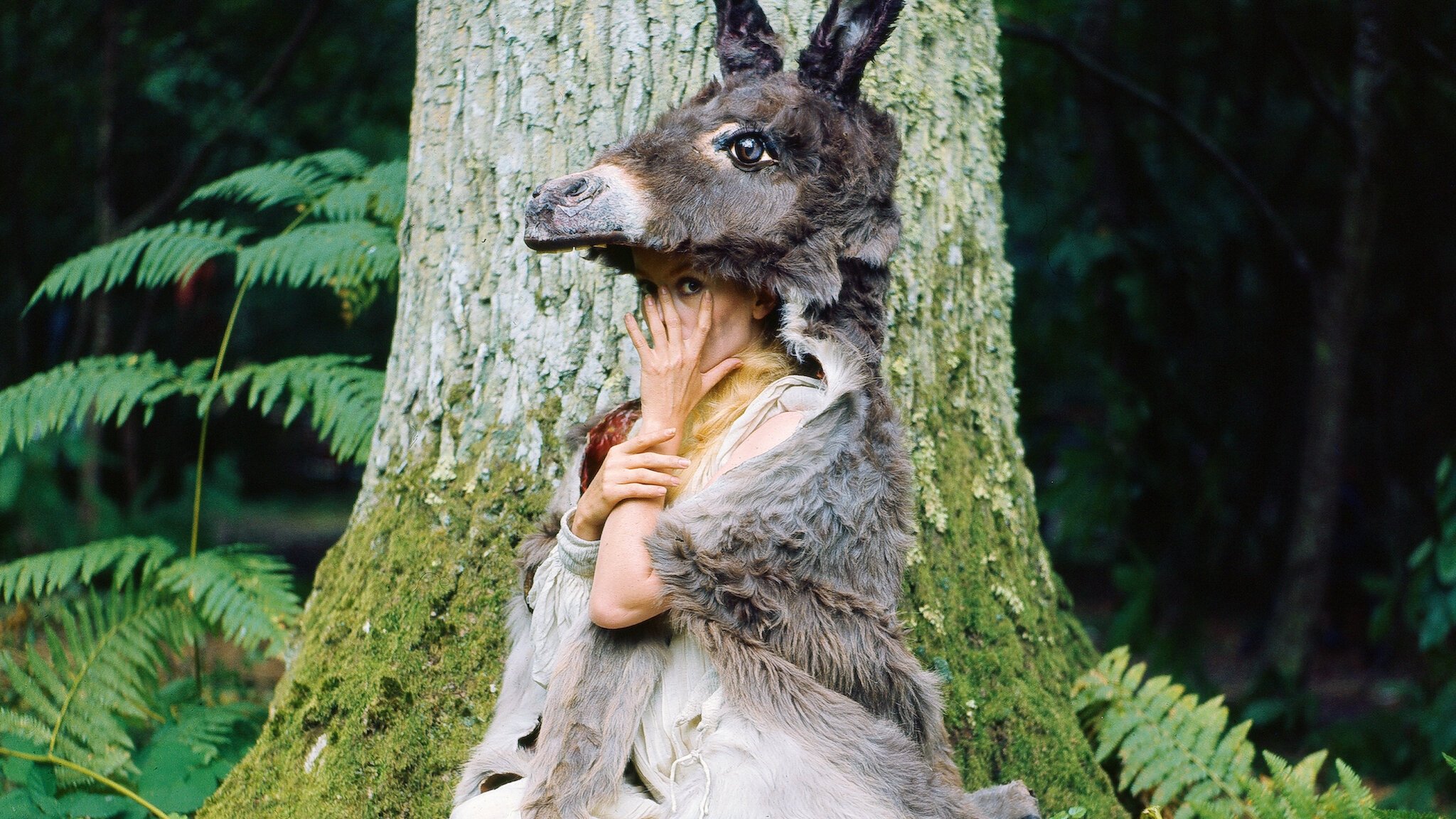
A beautiful princess is promised in marriage by her dying mother to the prince of a neighboring kingdom. Her father, the king, then vows to marry only her, and to fulfill his promise, he has a magical donkey that excretens gold and a dress that reflects the colors of the sky. He consults a fairy godmother, who tells him that the only way to avoid the impossible marriage is to wear the skin of his magical donkey. The princess flees into the countryside disguised as a peasant girl, known as 'Peau d'Ane' (Donkey Skin), and finds work on a farm.
Critical Reception
Peau d'Âne is widely considered a whimsical and visually stunning fairy tale adaptation, celebrated for its vibrant costumes, enchanting musical numbers, and Jacques Demy's unique directorial vision. While some found its narrative straightforward, critics and audiences alike praised its enduring charm and its clever subversion of traditional fairy tale tropes.
What Reviewers Say
- Visually spectacular with dazzling costumes and set design.
- A charming and inventive take on the classic fairy tale.
- Catherine Deneuve shines in a dual role, bringing depth to the princess and the disguised peasant.
Google audience: Audiences praise the film's magical atmosphere, enchanting music, and the beautiful performances, particularly Catherine Deneuve. Many appreciate its unique blend of classic fairy tale elements with a touch of modern sensibility.
Fun Fact
The iconic, shimmering dresses worn by Catherine Deneuve in the film, designed by Jacques Demy's wife, Agnès Varda, were actually created using real gold and silver lame fabric, contributing to their extraordinary radiance on screen.
AI-generated overview · Verify ratings on official sources