
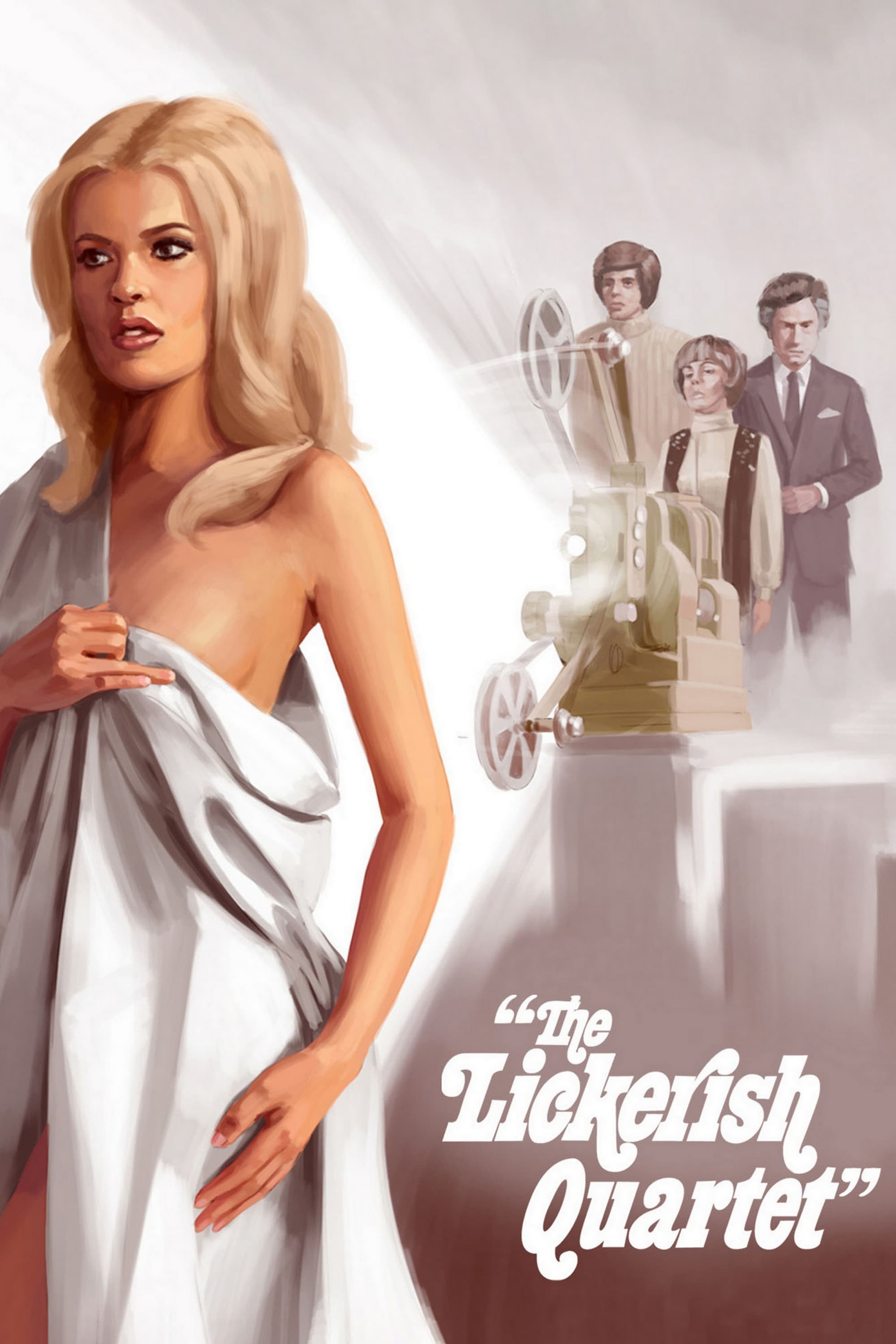

The Lickerish Quartet
A jaded, wealthy couple watch a blue movie in their castle home along with her adult son. The son is testy, so they go into town and watch a circus-like thrill ride. The daredevil woman in the show looks exactly like one of the women in the movie, so the man invites her to join them for a nightcap. Tensions among the family seem to rise. She stays overnight, and during her 24 hours in the castle, each of its three residents involves her in a fantasy. She, in turn, keeps asking, "Who has the gun?" Will there be violence before it's over?
Insights
Plot Summary
This avant-garde film is structured around four distinct episodes, each exploring a different facet of human desire and sexuality. The narrative is deliberately fragmented and symbolic, eschewing traditional storytelling for a more visceral and experimental approach. Through striking imagery and unconventional sequences, the film delves into themes of repression, liberation, and the complexities of the human psyche.
Critical Reception
The Lickerish Quartet is primarily recognized as a significant work in Japanese experimental cinema. It garnered attention for its bold exploration of sexuality and its avant-garde filmmaking techniques, though its challenging nature meant it was not widely accessible or embraced by mainstream audiences. Its critical standing is largely within art-house and academic circles that appreciate its artistic innovation and boundary-pushing content.
What Reviewers Say
- Praised for its audacious and experimental visual style.
- Noted for its frank and often unsettling exploration of sexual themes.
- Recognized as a key example of Japanese avant-garde filmmaking.
Google audience: Information on specific Google user reviews for 'The Lickerish Quartet' is not readily available, likely due to its niche and experimental nature. However, its general reception in art-house circles indicates an appreciation for its artistic merit and challenging themes.
Fun Fact
The film is notable for its highly abstract and often surreal visual sequences, which were groundbreaking for Japanese cinema at the time.
AI-generated overview · Verify ratings on official sources