
Movie spotlight
Borodin: Prince igor
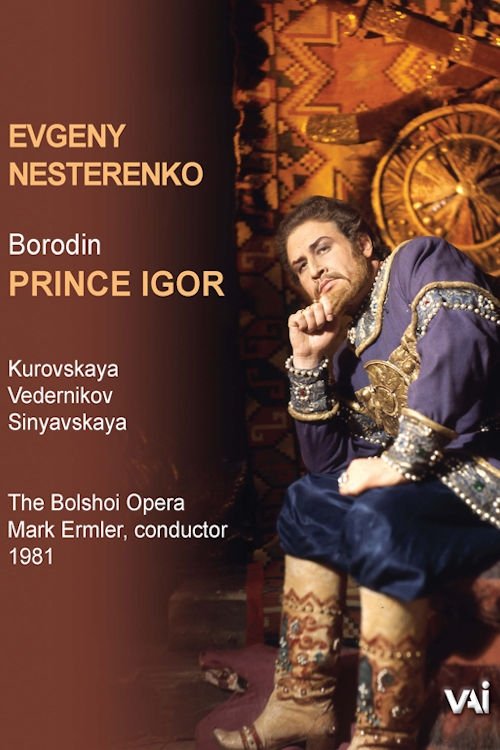
This 1981 Bolshoi production performed in the concert hall of The Kremlin is by far the best available, despite the more ‘historical’ picture and mono sound. The production itself is a very classic period production, with utterly authentic costumes and aptly dramatic sets. There are even horses on stage. The depiction of the Don Cossacks’ Khan Konchak and his tribe is colourful and historically informed in one. Needless to say, the scene of the Polovtsian Dances is spectacularly presented with great choregraphy and terrific dancing, in the league of the Spartacus of Bolshoi, no less.
Insights
Plot Summary
This opera film adaptation of Alexander Borodin's epic work, 'Prince Igor,' depicts the medieval Russian prince's 12th-century campaign against the invading Polovtsian hordes. It chronicles his capture, the subsequent plight of his people, and the dramatic events that unfold, including the famed 'Polovtsian Dances.' The narrative explores themes of patriotism, honor, and the clash of cultures.
Critical Reception
As a filmed version of a classic opera, 'Prince Igor' (1981) is primarily appreciated by opera enthusiasts and fans of classic Soviet cinema. Its reception often centers on the faithfulness to Borodin's score and the grandeur of its visual presentation, though film critics may find its pacing and dramatic structure less suited to a purely cinematic experience compared to modern productions.
What Reviewers Say
Praised for its faithful rendition of Borodin's powerful music and the iconic 'Polovtsian Dances.'
Commended for its historical spectacle and the operatic performances.
Some viewers find the pacing slower than contemporary films, typical of opera adaptations.
Google audience: Audience reviews for this specific film adaptation are scarce. However, general appreciation for Borodin's 'Prince Igor' as an opera often highlights its melodic richness, dramatic intensity, and the celebrated 'Polovtsian Dances.'
Fun Fact
The opera 'Prince Igor' was left unfinished at Borodin's death and was completed by Nikolai Rimsky-Korsakov and Alexander Glazunov. The famous 'Polovtsian Dances' are among the most recognizable pieces from Russian opera.
AI-generated overview · Verify ratings on official sources