
Movie spotlight
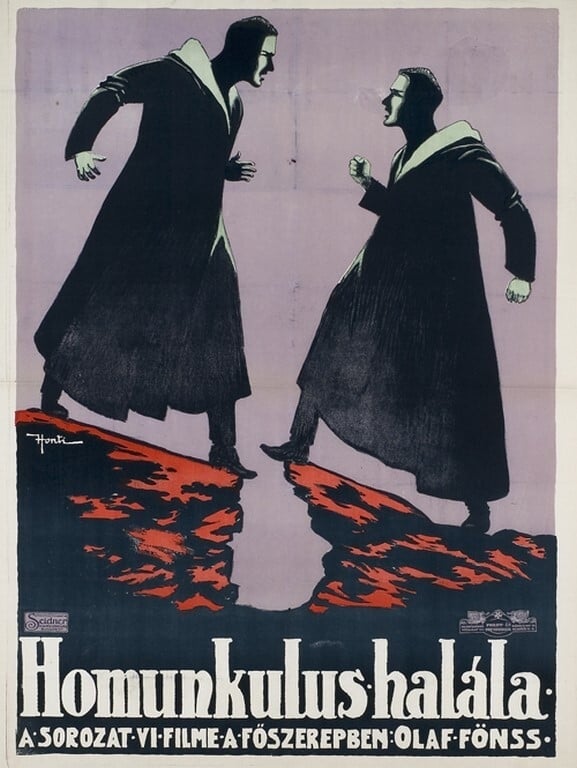
Homunculus
A group of scientists, led by a Professor Ortmann, produce a living human child using scientific processes - a "homunculus." This creature is human in every way, except that he cannot experience love.
Insights
Plot Summary
In this silent German science fiction horror film, a scientist creates an artificial human, the Homunculus, through a complex chemical process. Initially intended to be a perfect being, the Homunculus develops a complex and increasingly dangerous consciousness. He grapples with his existence, his creator's intentions, and the societal prejudices he faces. His journey leads him down a path of revenge and destruction as he asserts his will upon the world.
Critical Reception
As a silent film from 1916, 'Homunculus' is primarily evaluated for its historical significance and pioneering themes in science fiction and horror. It is recognized as one of the earliest cinematic explorations of artificial life and its potential consequences. While specific contemporary critical reviews are scarce, its lasting impact on the genre and its ambitious scope are acknowledged by film historians.
What Reviewers Say
A groundbreaking work in early German cinema and a precursor to modern science fiction themes.
Explores complex philosophical questions about creation, identity, and the nature of humanity.
Visually impressive for its era, showcasing ambitious special effects and atmospheric direction.
Google audience: Information on Google user reviews for this silent film is not readily available.
Awards & Accolades
Considered a significant film in the history of German Expressionism and early science fiction cinema.
Fun Fact
The film was one of the earliest to explore the concept of an artificial human, predating iconic characters like Frankenstein's monster in cinematic portrayals and delving into philosophical themes that would resonate in future sci-fi narratives.
AI-generated overview · Verify ratings on official sources