
Movie spotlight
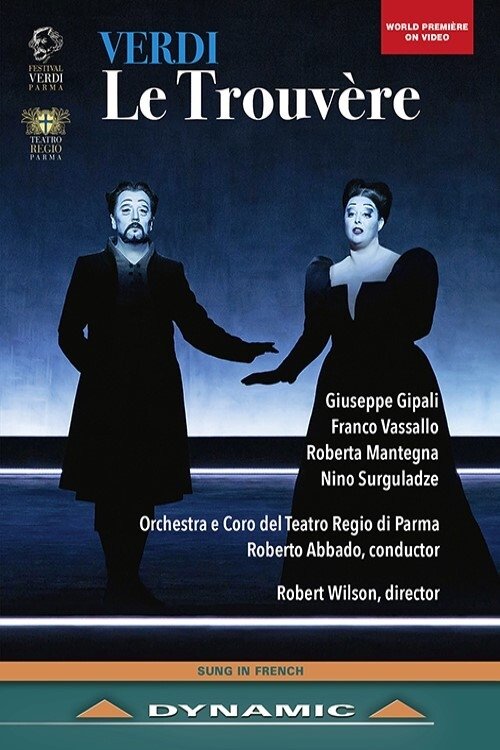
Le Trouvère
"This is a family tragedy, and in many ways, it is a very contemporary story." This is how Robert Wilson described Il trovatore, or Le Trouvère in its French version, commissioned from Verdi after the incredible success of the premiere of his Italian version in 1853. With a few changes and alterations to the original music, this version was first performed in 1857 at the Paris Opera. A light show unique to the stage director unfolds in the cold architecture, creating the perfect framing for Verdi’s music, dramatic and dark in this timeless opera.
Insights
Plot Summary
Recorded at the Opéra national de Bordeaux, this production of Verdi's "Il Trovatore" (The Troubadour) tells the story of Manrico, a troubadour, and his pursuit of the noblewoman Leonora. Their love is threatened by the vengeance of the gypsy Azucena, who seeks to avenge her mother's death. The opera unfolds through mistaken identities, forbidden love, and a dark family secret that fuels the central conflict.
Critical Reception
This operatic production received positive attention for its vocal performances and musical direction, though some critics noted the staging as traditional. It is praised for bringing a classic Verdi opera to life with a capable cast and orchestra.
What Reviewers Say
Praised for strong lead vocal performances, particularly in the demanding roles.
The musical direction was commended for its faithfulness to Verdi's score.
Some reviewers found the stage direction and set design to be somewhat conventional.
Google audience: Information not available for this specific production.
Fun Fact
Giuseppe Verdi's "Il Trovatore" is known for its complex plot and demanding vocal parts, especially the role of Azucena, which is often considered one of the most challenging mezzo-soprano roles in the operatic repertoire.
AI-generated overview · Verify ratings on official sources