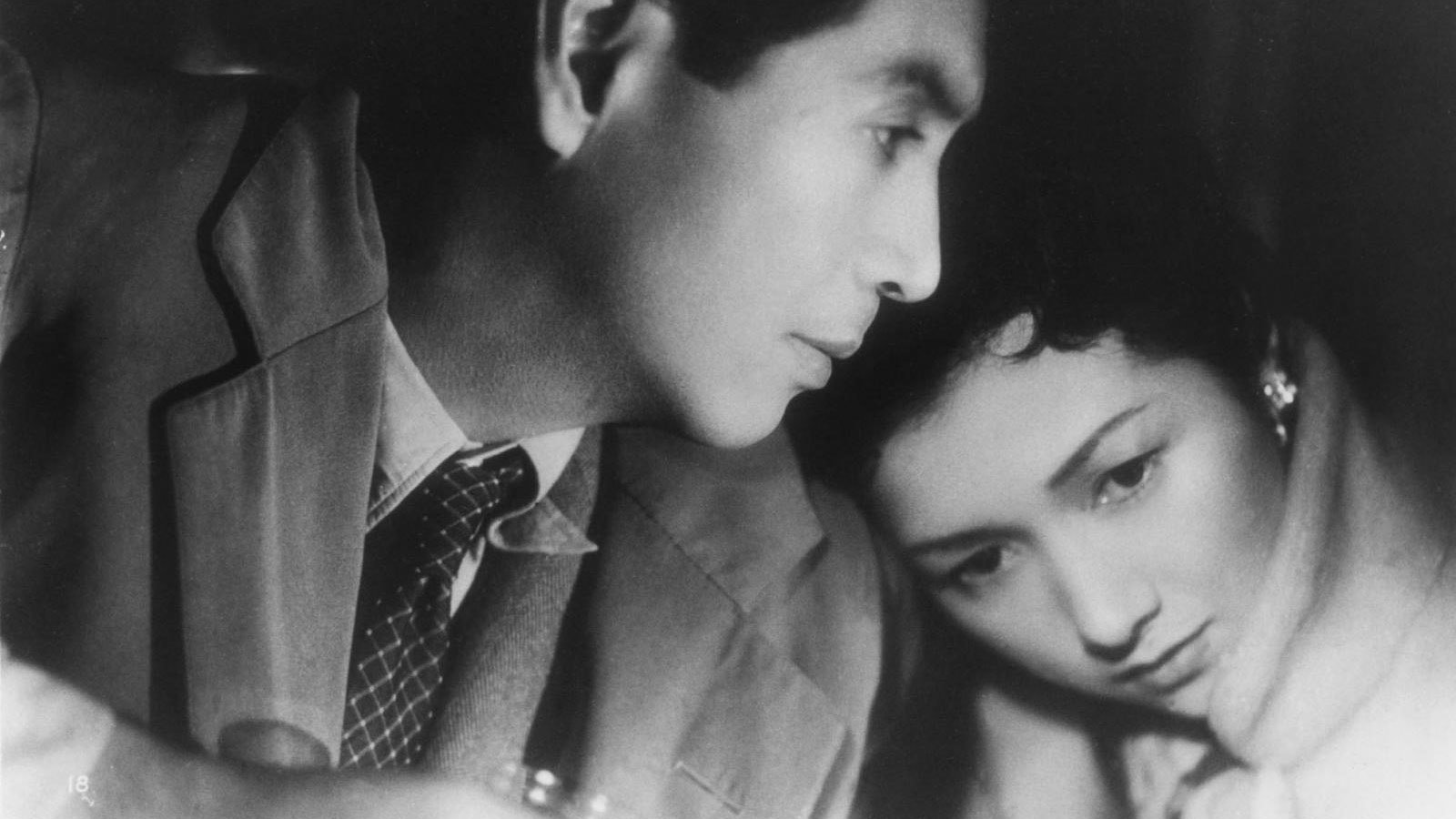




Floating Clouds
A married Japanese forester during WWII is sent to Indochina to manage forests. He meets a young Japanese typist and promises to leave his wife. He doesn't and after the war, she turns up and the affair resumes.
Insights
Plot Summary
In the aftermath of World War II, Tomi, a single woman who worked in a munitions factory, returns to Tokyo and reconnects with Yohei, a married man who was her supervisor. Their intense and often painful relationship unfolds against the backdrop of a struggling Japan, where societal norms are shifting and individual desires clash with traditional expectations.
Critical Reception
Floating Clouds is widely regarded as Mikio Naruse's masterpiece and a seminal work of Japanese cinema. Critics praised its profound exploration of post-war disillusionment, its nuanced character studies, and Naruse's masterful direction. It resonated with audiences for its unflinching portrayal of difficult relationships and the struggles of individuals in a changing society.
What Reviewers Say
- Praised for its raw emotional depth and realistic portrayal of a destructive relationship.
- Hailed as a poignant depiction of post-war Japanese society and its impact on individuals.
- Naruse's direction is lauded for its subtle yet powerful storytelling.
Google audience: Audience reviews often highlight the film's emotional power and its realistic, albeit bleak, depiction of human relationships and societal struggles in post-war Japan. Many find the performances, particularly Hideko Takamine's, to be incredibly compelling.
Awards & Accolades
Nominated for the Palme d'Or at the 1956 Cannes Film Festival. Named one of the greatest films of all time by various critics' polls.
Fun Fact
The film's acclaimed lead actress, Hideko Takamine, was also known for her child acting roles and had a long and distinguished career in Japanese cinema.
AI-generated overview · Verify ratings on official sources
My Review
TMDB Reviews
1 reviews