
Movie spotlight
Petrol - Carburant - Kraftstoff
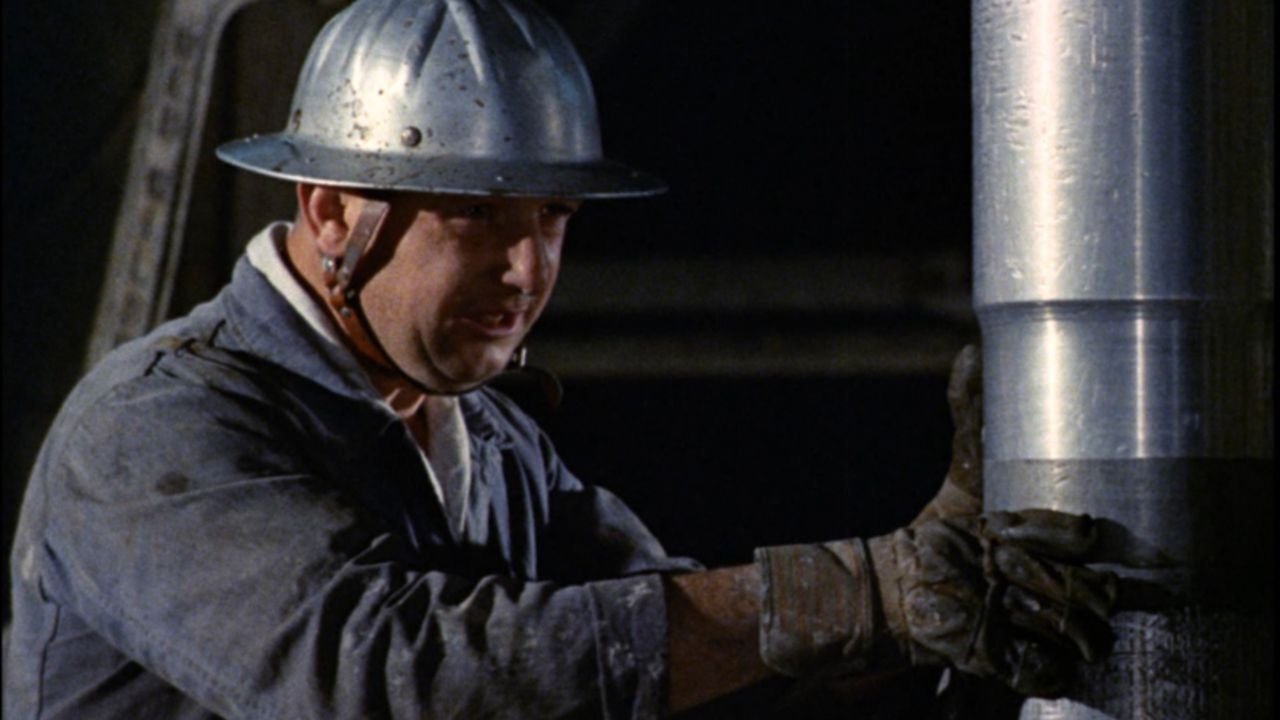
An audiovisual experiment that shows how oil is refined into gasoline and ultimately powers cars and other vehicles, accompanied by classical music and experimental synthesizer sounds. Filmed in the Libyan desert, the film traces the path and development of the gasoline, from the extraction of oil as it is drilled in the Libyan desert to the pump at the gas station, making road construction machines dance and convertibles roar through the Spessart forests. This film also drew Herbert von Karajan and Leo Kirch's attention to Hugo Niebeling, in which the director has road bulldozers "dance" to the music of Vivaldi.
Insights
Plot Summary
This short documentary explores the science and history behind petrol, also known as gasoline. It delves into its composition, how it's refined from crude oil, and its significance as a fuel source for automobiles and other machinery. The film also touches upon the industrial processes involved in its production and distribution.
Critical Reception
As a short documentary from 1965, detailed critical reception is scarce. However, films of this nature were typically produced for educational or informational purposes, aiming to provide clear explanations of complex industrial topics to a general audience. They were generally received as informative and straightforward.
What Reviewers Say
Provides a basic overview of petrol's origin and use.
Appears to be an educational film from its era.
Details the refining process in a concise manner.
Google audience: As this is an older, specialized documentary, there are no readily available Google user reviews to summarize its reception.
Fun Fact
The film's title, "Petrol - Carburant - Kraftstoff," uses the word for petrol in three different languages: English, French, and German, suggesting an international or broadly European focus for its distribution or subject matter.
AI-generated overview · Verify ratings on official sources