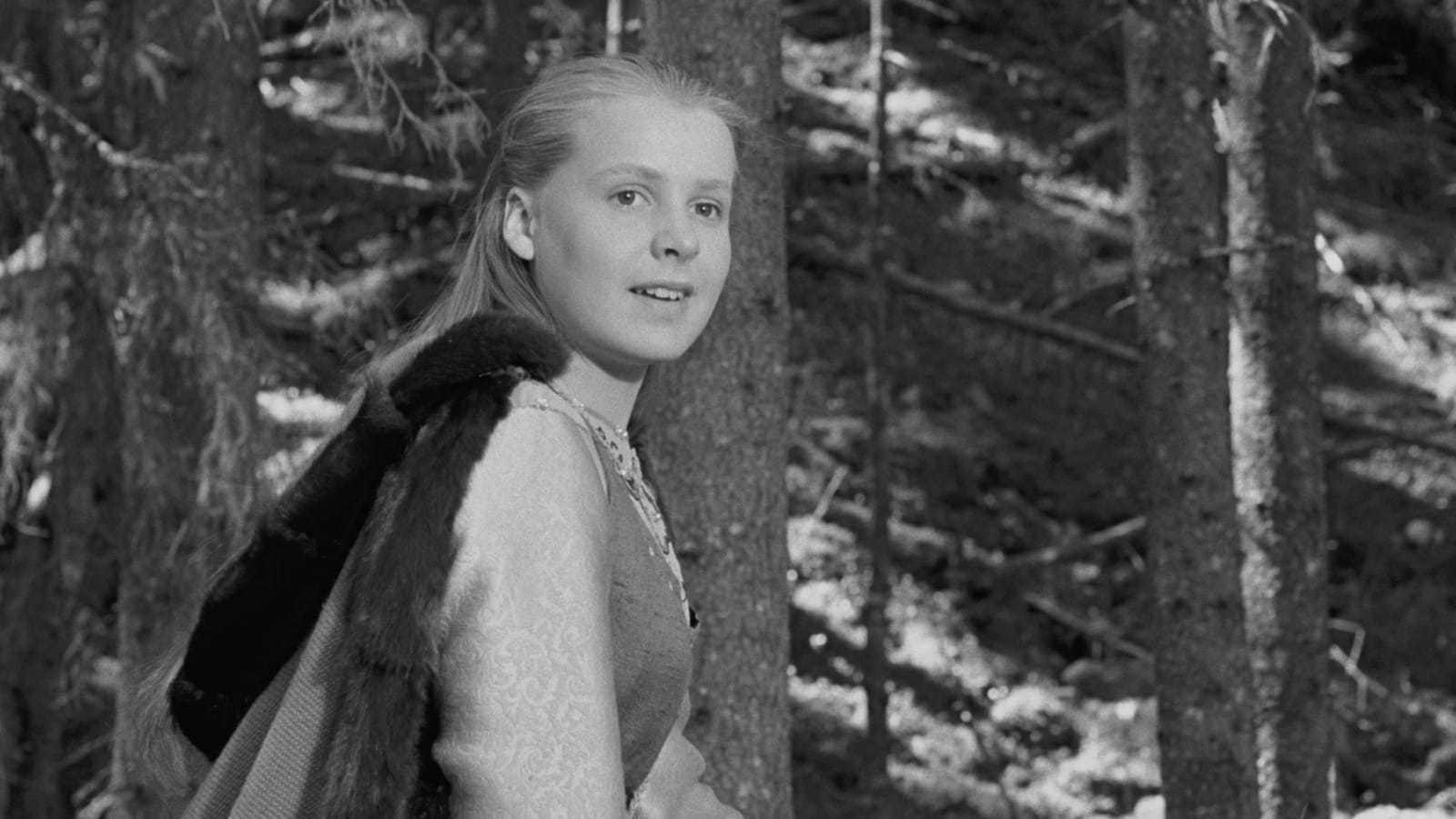

The Virgin Spring
Devout Christians Töre and Märeta send their only daughter, the virginal Karin, and their foster daughter, the unrepentant Ingeri, to deliver candles to a distant church. On their way through the woods, the girls encounter a group of savage goat herders who brutally rape and murder Karin as Ingeri remains hidden. When the killers unwittingly seek refuge in the farmhouse of Töre and Märeta, Töre plots a fitting revenge.
Insights
Plot Summary
A pious young woman, Karin, is raped and murdered by a group of herdsmen on her way to church to deliver candles. Her parents discover what happened and seek justice, but are led to the very men who committed the crime. When the father learns the truth, he enacts a brutal and terrifying revenge.
Critical Reception
The Virgin Spring was widely acclaimed by critics for its powerful storytelling, masterful direction by Ingmar Bergman, and strong performances, particularly from its lead actors. It is considered a landmark film in Bergman's oeuvre and a significant work of international cinema, praised for its unflinching exploration of faith, revenge, and human brutality.
What Reviewers Say
- Praised for its stark depiction of medieval life and its intense exploration of primal human emotions.
- Bergman's masterful direction and the film's visual style were frequently highlighted.
- Thematic depth, particularly concerning faith and vengeance, resonated with critics.
Google audience: Information not available.
Awards & Accolades
Won the Academy Award for Best Foreign Language Film at the 33rd Academy Awards. Also won the Golden Globe Award for Best Foreign Film.
Fun Fact
The film is based on a 13th-century ballad, 'Tore Hund', and was intentionally shot in black and white to enhance its medieval atmosphere and stark themes.
AI-generated overview · Verify ratings on official sources