
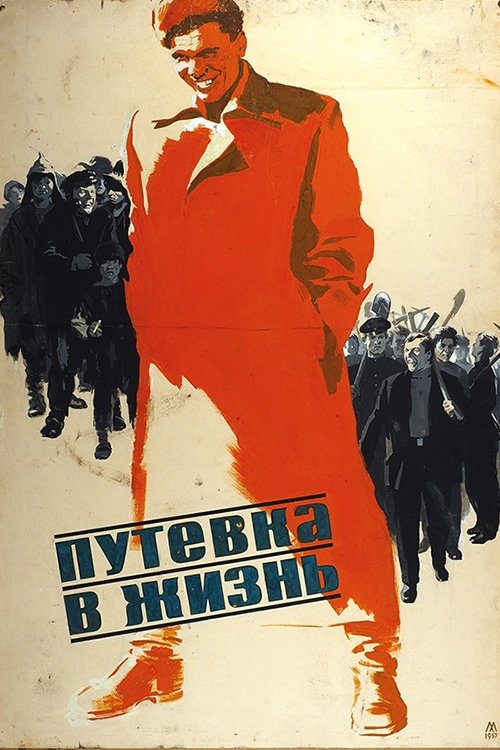

Road to Life
Young hobos are taken to a new camp to become good Soviet citizens. This camp works without any guards, and it works well. But crooks kill one of the young people when they try to damage the newly built railroad to the camp.
Insights
Plot Summary
The film follows the struggles of an orphan boy named Kolya as he navigates the harsh realities of post-revolution Russia. He encounters various characters, including a kind factory worker, who try to guide him towards a better life. The narrative explores themes of redemption, the impact of societal changes on individuals, and the search for belonging amidst hardship.
Critical Reception
Road to Life is widely regarded as a groundbreaking film in Soviet cinema, praised for its realism and emotional depth. It was a significant achievement in early sound film and captured the attention of international audiences for its powerful portrayal of social issues and human resilience. While specific contemporary reviews are scarce, its lasting legacy as an important artistic and social document is undeniable.
What Reviewers Say
- Praised for its realistic portrayal of Soviet life and its moving narrative.
- Noted as an early example of effective sound film techniques.
- Commended for its focus on individual struggle within a broader societal context.
Google audience: Audience reception information for this early Soviet film is not widely available through Google reviews.
Fun Fact
Nikolai Ekk's 'Road to Life' was the first Soviet sound film, featuring synchronized music and sound effects, which was a significant technological advancement for its time.
AI-generated overview · Verify ratings on official sources