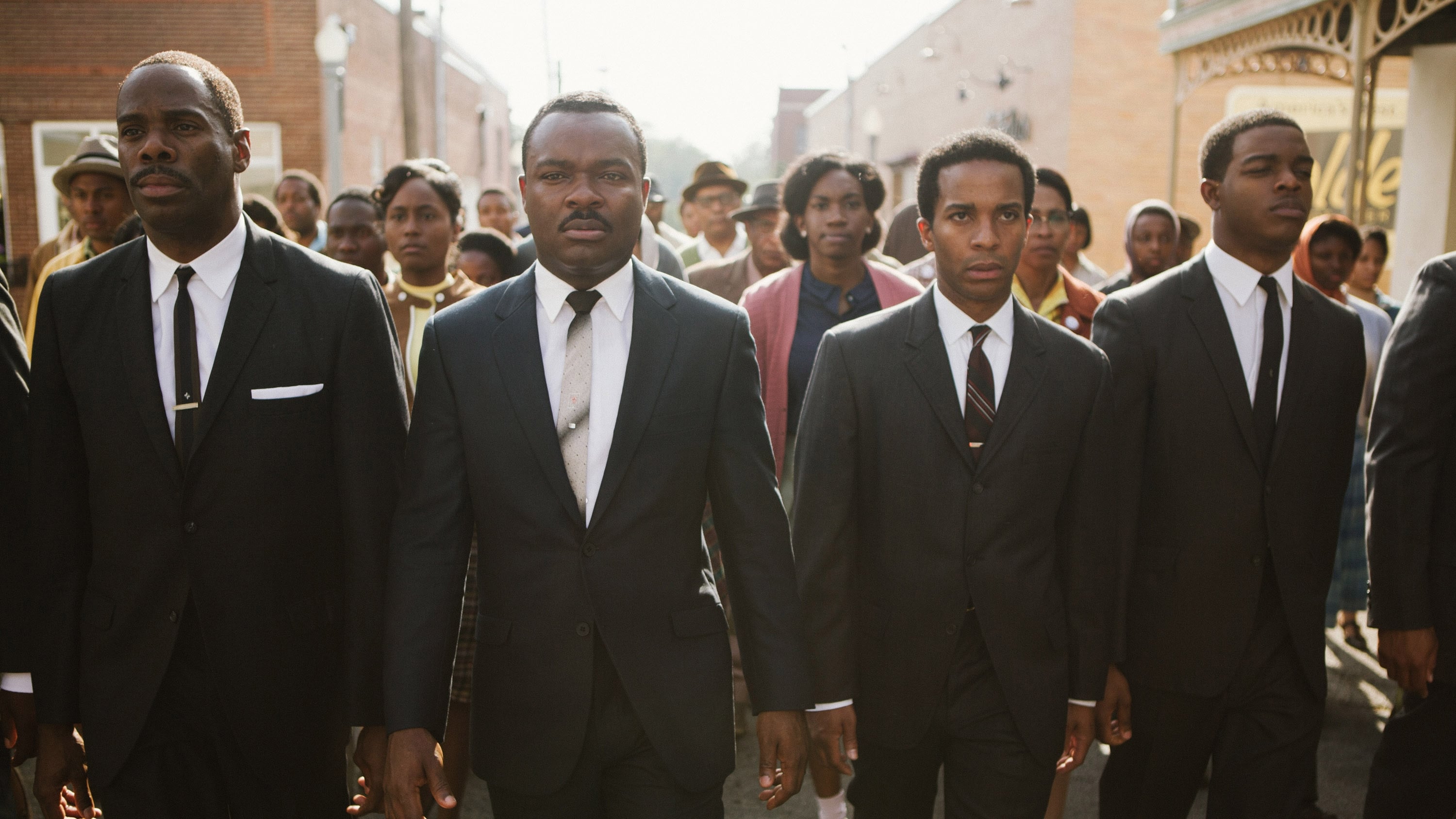

Selma
"Selma," as in Alabama, the place where segregation in the South was at its worst, leading to a march that ended in violence, forcing a famous statement by President Lyndon B. Johnson that ultimately led to the signing of the Voting Rights Act.
Insights
Plot Summary
In 1965, Dr. Martin Luther King Jr. leads a dangerous campaign to secure equal voting rights, facing violent opposition from President Lyndon B. Johnson and the state of Alabama. The march from Selma to Montgomery, Alabama, becomes a pivotal moment in the Civil Rights Movement, galvanizing public opinion and ultimately leading to the passage of the Voting Rights Act of 1965.
Critical Reception
Selma was met with widespread critical acclaim, praised for its powerful direction, Oyelowo's performance as Dr. King, its historical accuracy, and its relevance to contemporary issues of racial justice. It was also a commercial success, earning critical praise for its unflinching portrayal of a crucial moment in American history.
What Reviewers Say
- Praised for its powerful and nuanced portrayal of Martin Luther King Jr. and the Selma march.
- Acclaimed for Ava DuVernay's masterful direction and the film's historical significance.
- Commended for its relevance and its ability to inspire and provoke thought on civil rights.
Google audience: Audience reviews highlight the film's emotional impact, strong performances, and its importance as a historical document. Many viewers found it inspiring and a vital reminder of the struggles for civil rights.
Awards & Accolades
Nominated for the Academy Award for Best Picture and won the Academy Award for Best Original Song ('Glory'). Received multiple Golden Globe nominations, including Best Motion Picture – Drama. Named one of the AFI's Top 10 Films of the Year.
Fun Fact
President Barack Obama and First Lady Michelle Obama hosted a private screening of "Selma" at the White House for cast and crew members, and also invited civil rights leaders and activists.
AI-generated overview · Verify ratings on official sources