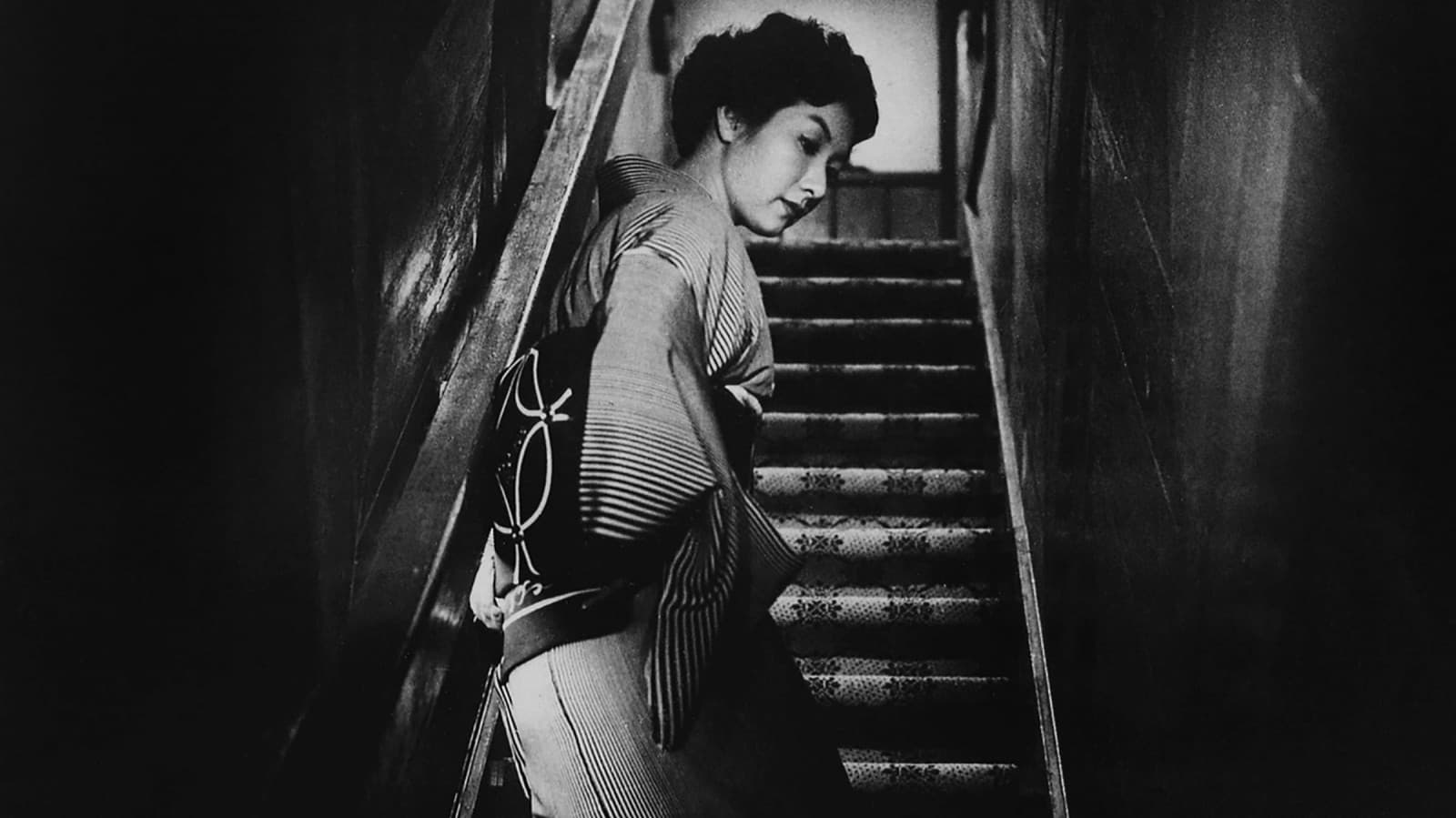

Movie spotlight
When a Woman Ascends the Stairs
Keiko, whom everyone calls Mama, narrates her story: she's a hostess on the Ginza, 30, a widow. She describes life's vicious cycle: acting cheerful around drunks, dressing and living well to convey confidence, needing money for these expenses and for her demanding mother and brother, and knowing she's growing older.
Insights
Plot Summary
In postwar Tokyo, a woman working in a bar grapples with societal expectations and her own desires. She navigates complex relationships with clients and colleagues while striving for independence and a better future. The film explores themes of loneliness, ambition, and the search for identity in a rapidly changing Japan.
Critical Reception
While not a mainstream international hit, "When a Woman Ascends the Stairs" received critical acclaim in Japan for its sensitive portrayal of a woman's struggle for autonomy and its nuanced exploration of social issues. It is recognized for its strong performance by Michiyo Aratama and its realistic depiction of post-war Japanese society.
What Reviewers Say
Praised for its sensitive portrayal of a woman's struggle for independence.
Noted for Michiyo Aratama's powerful and nuanced performance.
Appreciated for its realistic depiction of post-war Japanese society and its social undercurrents.
Google audience: Information on Google user reviews for this film is not readily available.
Awards & Accolades
Nominated for the Golden Lion at the Venice Film Festival.
Fun Fact
The film was shot in black and white, a common practice for Japanese films of this era, which enhances its dramatic and atmospheric qualities.
AI-generated overview · Verify ratings on official sources