
Movie spotlight
Rich Media, Poor Democracy
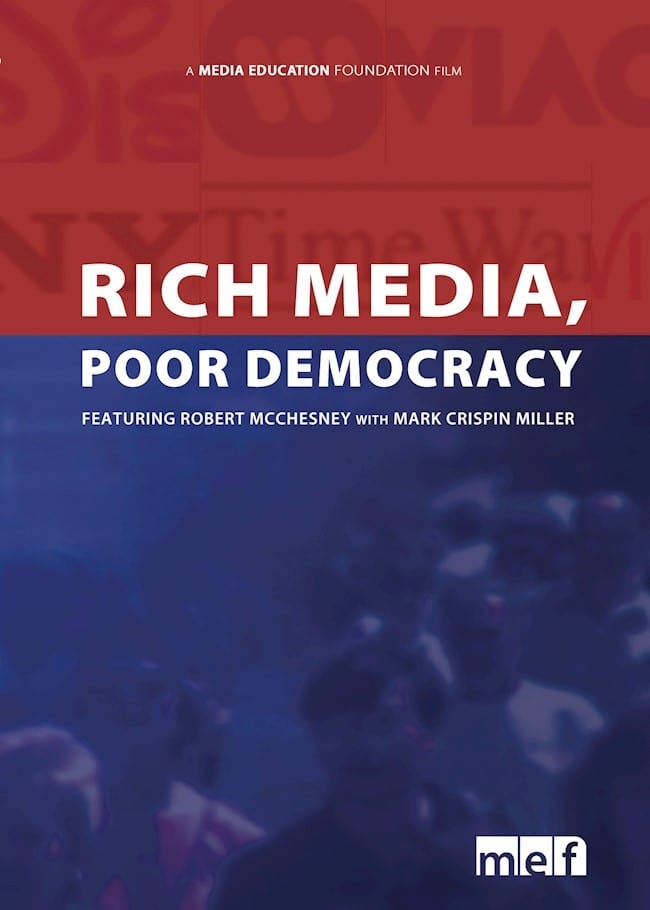
Robert McChesney lays the blame for the US's current state of affairs squarely at the doors of the corporate boardrooms of big media, which far from delivering on their promises of more choice and more diversity, have organized a system characterized by a lack of competition, homogenization of opinion and formulaic programming.
Insights
Plot Summary
This documentary examines the concentration of media ownership and its impact on democratic discourse. It argues that a small number of wealthy corporations control the vast majority of media outlets, leading to a homogenization of news and a suppression of diverse viewpoints. The film explores how this corporate control shapes public opinion and hinders genuine democratic participation.
Critical Reception
While not a traditional film released to wide audiences, 'Rich Media, Poor Democracy' has been highly regarded within academic and media studies circles for its rigorous analysis and provocative arguments. It is considered a foundational text for understanding media consolidation and its implications for democracy.
What Reviewers Say
Critiques the overwhelming concentration of media ownership by a few powerful corporations.
Highlights how this consolidation leads to biased reporting and limits the diversity of public discourse.
Argues for the negative impact of corporate media control on democratic processes.
Google audience: As this is primarily an academic documentary, specific Google user reviews are not readily available. However, discussions surrounding the film in academic contexts praise its in-depth research and its crucial insights into media power structures.
Awards & Accolades
None notable (primarily an academic/documentary film)
Fun Fact
The film is based on Robert W. McChesney's book of the same name, which further elaborates on the complex relationship between media ownership, capitalism, and democracy.
AI-generated overview · Verify ratings on official sources