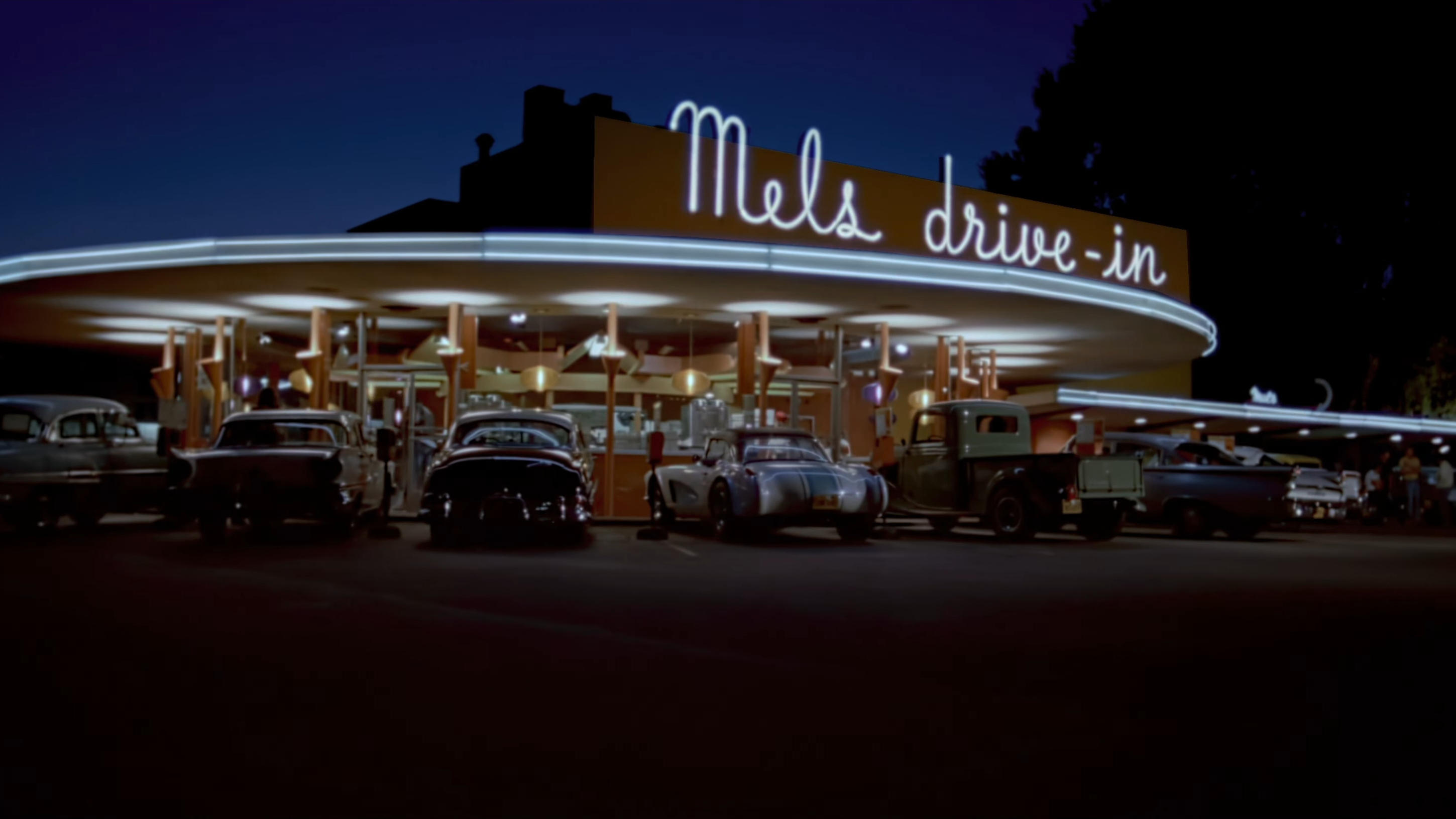


American Graffiti
A couple of high school graduates spend one final night cruising the strip with their buddies before they go off to college.
Insights
Plot Summary
On the last night of summer in 1962, four high school friends cruise the streets of their small California town in their cars. As they face decisions about their futures, with some heading off to college and others staying behind, they reflect on their last carefree moments together, their relationships, and the music that defines their generation. The film captures a poignant transition from adolescence to adulthood.
Critical Reception
American Graffiti was a critical and commercial success, hailed for its nostalgic portrayal of a bygone era and its authentic depiction of teenage life in the early 1960s. Critics praised its direction, soundtrack, and performances, recognizing it as a significant cultural touchstone.
What Reviewers Say
- Praised for its authentic portrayal of 1960s youth culture and nostalgia.
- Lauded for its innovative use of music and its poignant coming-of-age narrative.
- Recognized as a significant cultural touchstone capturing a specific American moment.
Google audience: Audiences widely appreciate the film's nostalgic feel, memorable soundtrack, and relatable coming-of-age story, often citing it as a classic that perfectly captures the spirit of the early 1960s.
Awards & Accolades
Nominated for five Golden Globe Awards, including Best Motion Picture – Musical or Comedy, and two Academy Awards (Best Picture, Best Director).
Fun Fact
The iconic "Wolfman Jack" radio segments heard throughout the film were actually recorded separately by actor George "Wolfman Jack" Thompson, who was not on set during principal photography.
AI-generated overview · Verify ratings on official sources
My Review
TMDB Reviews
1 reviews