Movie spotlight
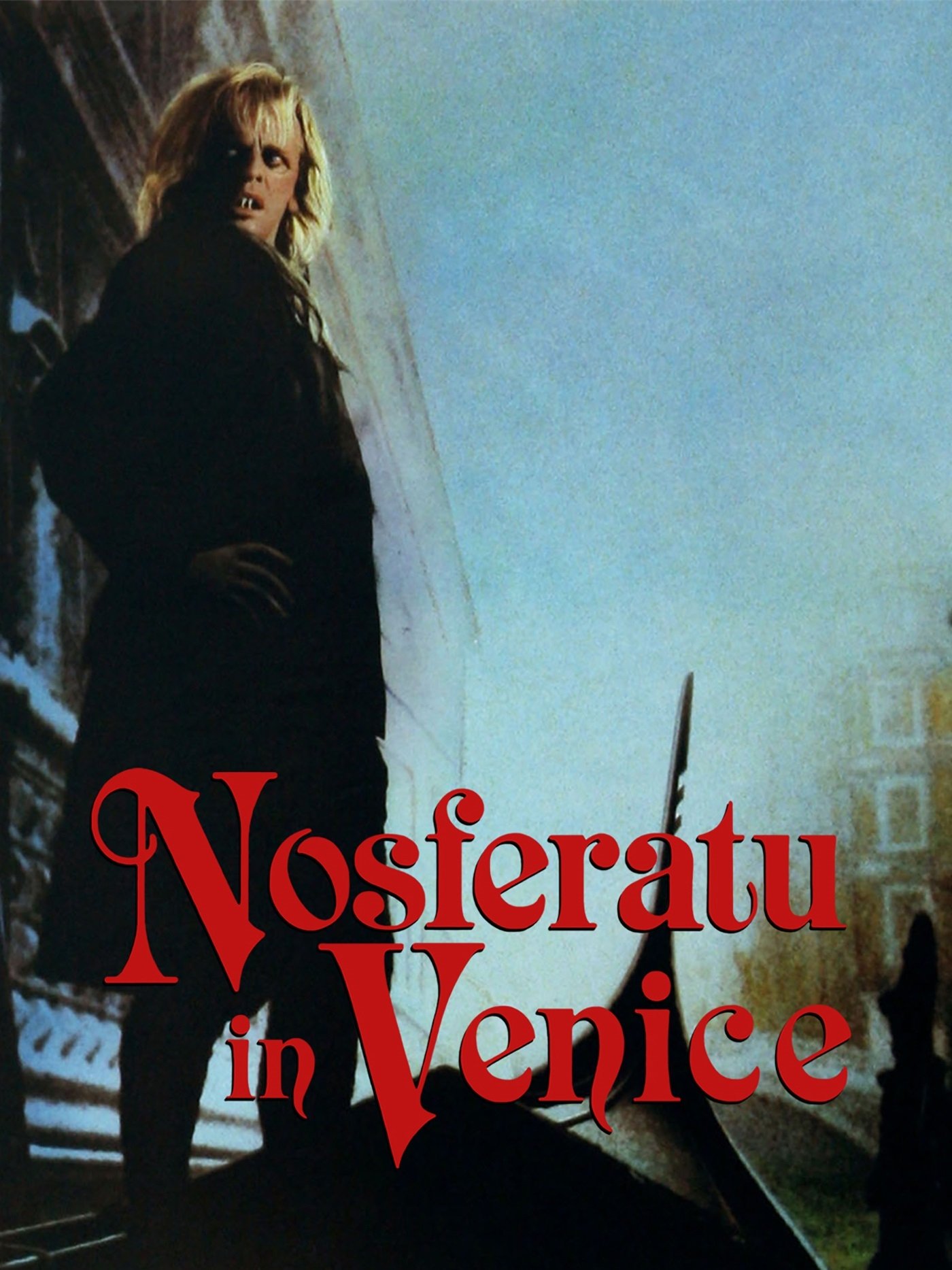
Nosferatu in Venice
Professor Paris Catalano visits Venice, to investigate the last known appearance of the famous vampire Nosferatu during the carnival of 1786.
Insights
Plot Summary
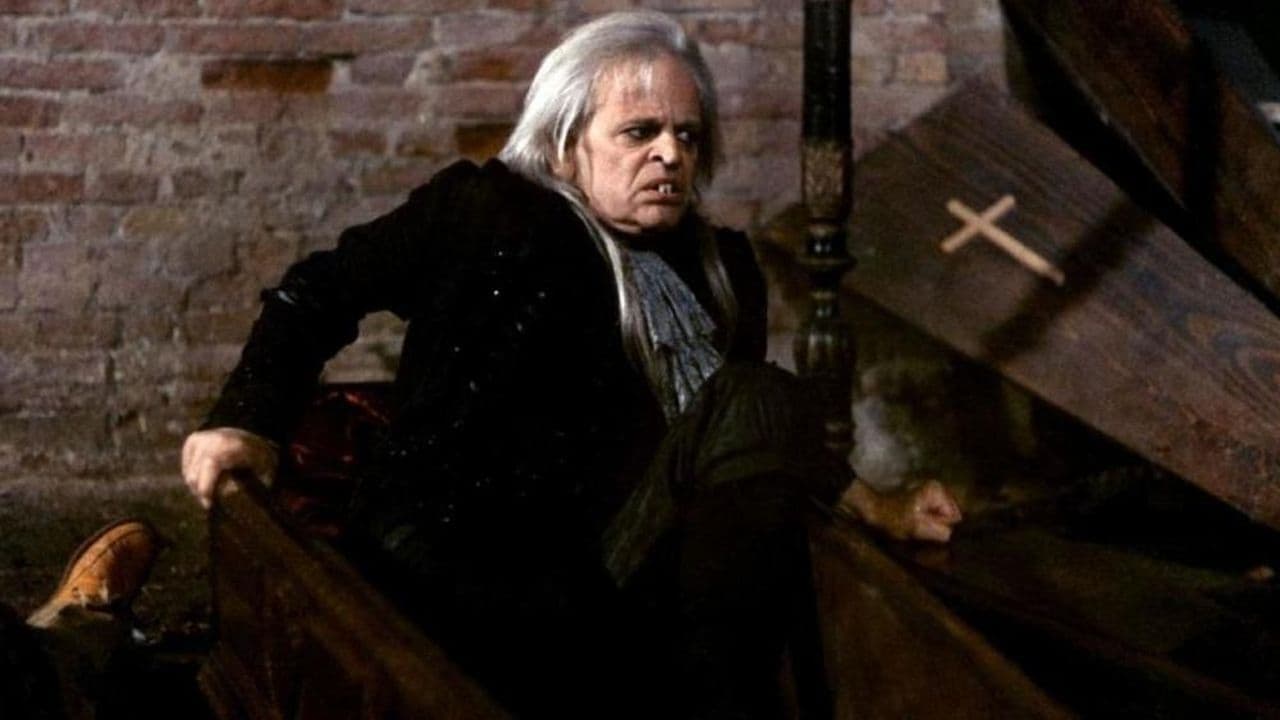
Count Nosferatu arrives in Venice, drawn by the allure of a mysterious woman he believes to be his reincarnation. He seeks to shed his vampiric curse and find solace in love, but his presence unleashes a wave of dread and supernatural events upon the city. As he pursues his forbidden desire, he becomes entangled in a dangerous game of cat and mouse with an enigmatic prince.
Critical Reception
Nosferatu in Venice was met with generally mixed to negative reviews, often criticized for its convoluted plot and Kinski's theatrical performance. While some appreciated its atmospheric attempt at a gothic horror revival, many found it a disappointing follow-up to Werner Herzog's acclaimed 1979 'Nosferatu the Vampyre'.
What Reviewers Say
Often considered a lesser entry in the Nosferatu lineage, with a plot that struggles to maintain coherence.
Klaus Kinski's performance is polarizing, seen by some as a return to form and by others as excessively melodramatic.
The film attempts a gothic atmosphere but often falls short due to production values and direction.
Google audience: Audience reception for Nosferatu in Venice is largely absent from public record, but critical commentary suggests a divided and generally unenthusiastic response. Many viewers found the film to be a perplexing and ultimately unsatisfying continuation of the Nosferatu mythos.
Fun Fact
Klaus Kinski, who famously played Count Orlok in Werner Herzog's 'Nosferatu the Vampyre,' reprises a similar role as Count Nosferatu in this independent Italian production, though it is not a direct sequel.
AI-generated overview · Verify ratings on official sources