
Movie spotlight
The Working Class Goes to Heaven
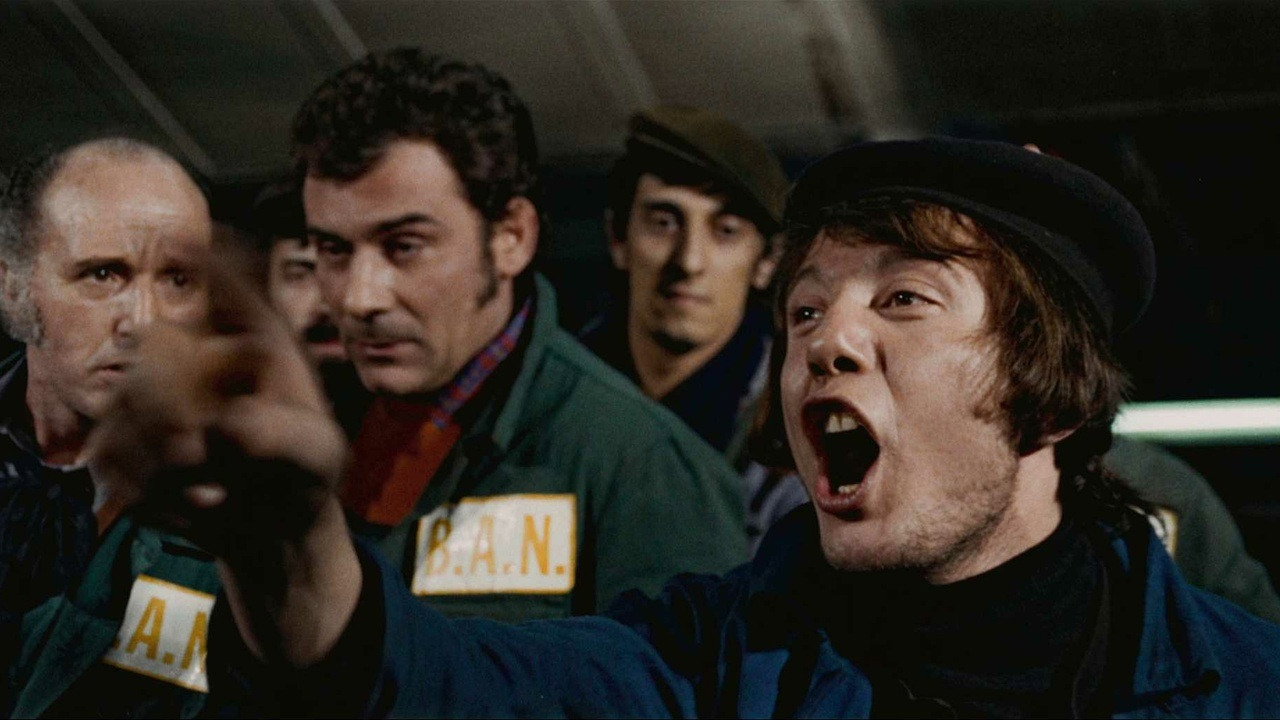
After losing a finger in a work accident, an Italian worker becomes increasingly involved in political and revolutionary groups.
Insights
Plot Summary
Luigi Montanari, a dedicated factory worker known for his efficiency, suffers an accident that paralyzes his left side. This event triggers a profound existential crisis and a political awakening, leading him to question the oppressive nature of his labor and the societal structures that confine him. As he navigates his new reality and engages with radical student movements, his life becomes a battleground between conformity and rebellion.
Critical Reception
Elio Petri's 'The Working Class Goes to Heaven' was met with critical acclaim for its incisive portrayal of industrial alienation and class struggle. The film was lauded for its powerful performances, particularly from Gian Maria Volonté, and its bold, experimental cinematic style that mirrored the protagonist's fractured mental state. It resonated with audiences and critics alike for its unflinching examination of the dehumanizing effects of capitalism and the potential for individual awakening.
What Reviewers Say
Praised for its sharp political commentary on class and labor.
Gian Maria Volonté's performance is considered a career highlight.
Applauded for its innovative and challenging visual style.
Google audience: Information regarding specific Google user reviews and their summary is not readily available for this film.
Awards & Accolades
Golden Bear at the 21st Berlin International Film Festival
Fun Fact
The film's title is a direct reference to the Marxist concept of class struggle and the idea of a proletariat revolution.
AI-generated overview · Verify ratings on official sources